सप्तक - Saptak
The word Saptak comes from Sapta, meaning seven.
A Saptak is the organised sequence of the seven basic swaras:
"Sa Re Ga Ma Pa Dha Ni" followed by the Sa of the next octave.
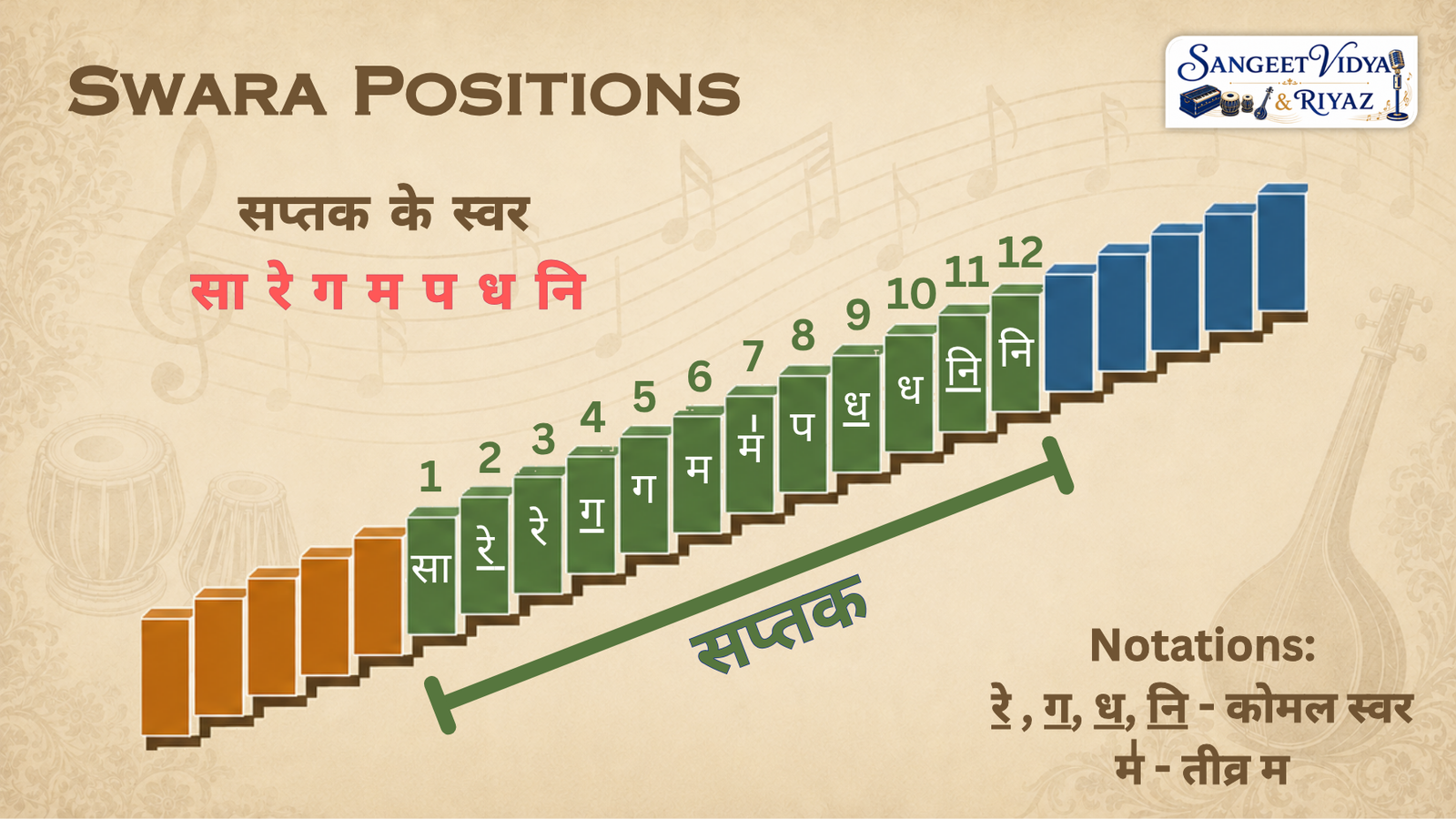
In practical Hindustani music, three registers(Saptaks/Octaves) are commonly identified:
Mandra Saptak:
The lower register.
Madhya Saptak:
The middle register.
Taar Saptak:
The upper register.
These are not three different sets of swaras. The same seven swara names recur in different pitch registers.
For example:
Mandra: lower Sa Re Ga Ma Pa Dha Ni
Madhya: Sa Re Ga Ma Pa Dha Ni
Taar: higher Sa Re Ga Ma Pa Dha Ni
Need Explanation?
Join Indian Classical Sessions to learn music in systematic way and develop a strong base in music.
Start Learning
The concept of Saptak is important because a singer must learn not only which swara is being sung, but also in which register it is being sung.
Notation
In many Hindustani notation systems, lower-register swaras are marked with a dot below and upper-register swaras with a dot above.
सप्तक शब्द 'सप्त' से बना है, जिसका अर्थ है - सात।
सप्तक सात मूल स्वरों के क्रम को कहा जाता है:
"सा रे ग म प ध नि" और इसके बाद आने वाला अगला सा अगले सप्तक का प्रारम्भ करता है।
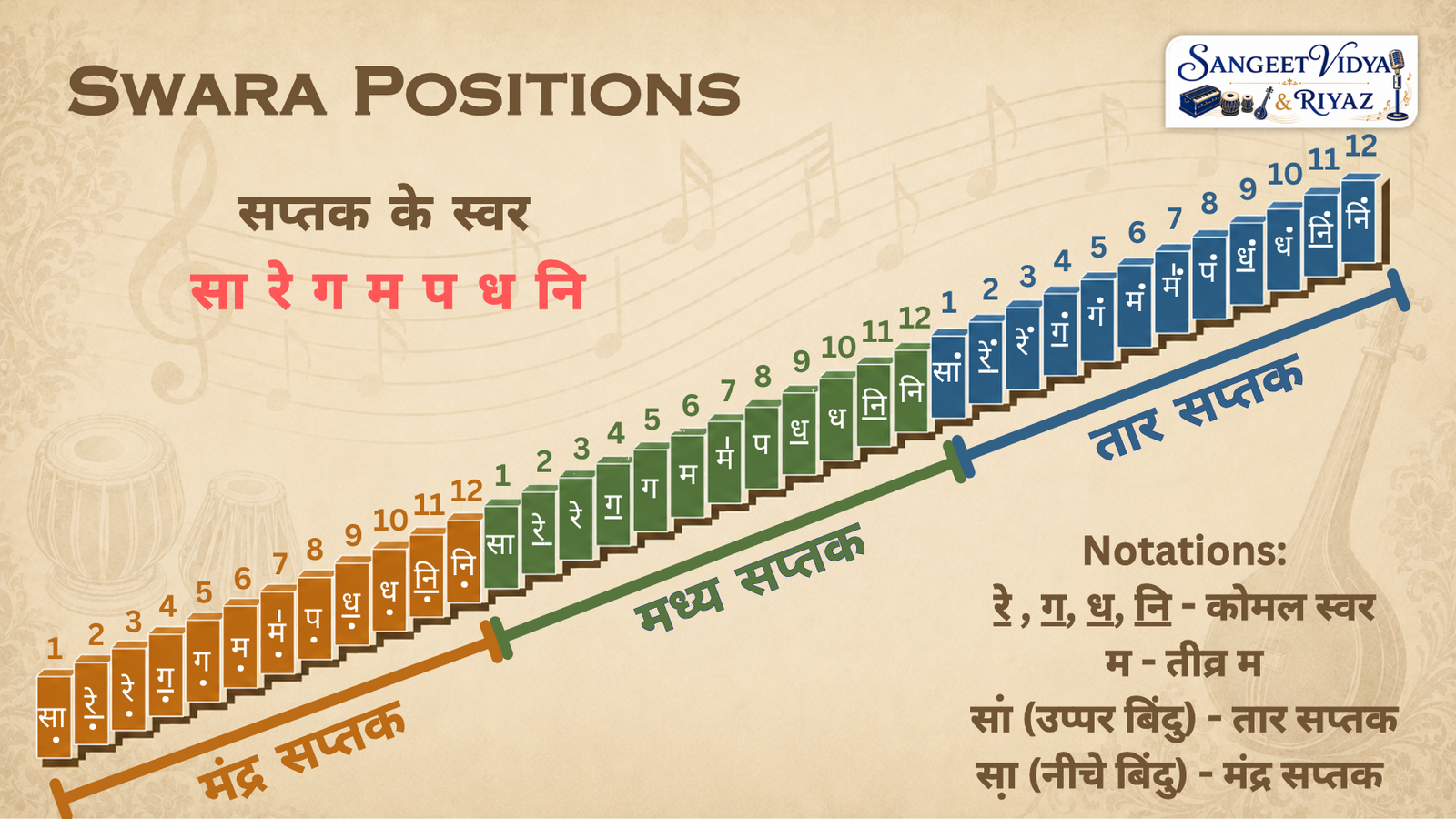
हिन्दुस्तानी संगीत में सामान्यतः तीन सप्तकों का प्रयोग बताया जाता है:
मन्द्र सप्तक:
स्वरों का निम्न अथवा नीचे का क्षेत्र।
मध्य सप्तक:
स्वरों का मध्य क्षेत्र। सामान्यतः प्रारम्भिक गायन-शिक्षा इसी क्षेत्र से आरम्भ होती है।
तार सप्तक:
स्वरों का ऊपरी क्षेत्र।
ये तीन अलग-अलग प्रकार के स्वर नहीं हैं। प्रत्येक सप्तक में वही सात स्वर दोहराए जाते हैं, केवल उनकी pitch अलग होती है।
अर्थात्:
मन्द्र: नीचे का सा रे ग म प ध नि
मध्य: सा रे ग म प ध नि
तार: ऊपर का सा रे ग म प ध नि
इसलिए विद्यार्थी को केवल स्वर का नाम ही नहीं, बल्कि यह भी पहचानना सीखना चाहिए कि वह स्वर किस सप्तक में है।
Notation
सामान्य हिन्दुस्तानी स्वर-लिपि में मन्द्र सप्तक के स्वरों के नीचे बिन्दु और तार सप्तक के स्वरों के ऊपर बिन्दु लगाने की परम्परा मिलती है।
Go Back to List of All Topics